Start with the exact shoe, not a cleaning hack
A waterproof label describes intended use, not cleaning permission. Start with the model name on the label, box or receipt, then match it to the maker's page. Check whether the instructions cover the whole shoe or only one component. A knit-looking panel does not establish the material of the overlays, lining or sole. If the page shows a different construction, do not use it as your cleaning instructions.
Build a care card before reaching for water
Record five items: exact model and variant; upper materials; care-page URL; whether the insole is explicitly removable; permitted cleaner, wash method and drying directions. Mark missing answers as unknown. Start with the dirtiest area: outsole mud, an upper stain or the lining. These are different jobs; a sole-cleaning instruction does not authorize soaking the upper. Keep this card with your shoe details so the next muddy round does not send you back to an unrelated cleaning hack.
Smooth leather and synthetic uppers
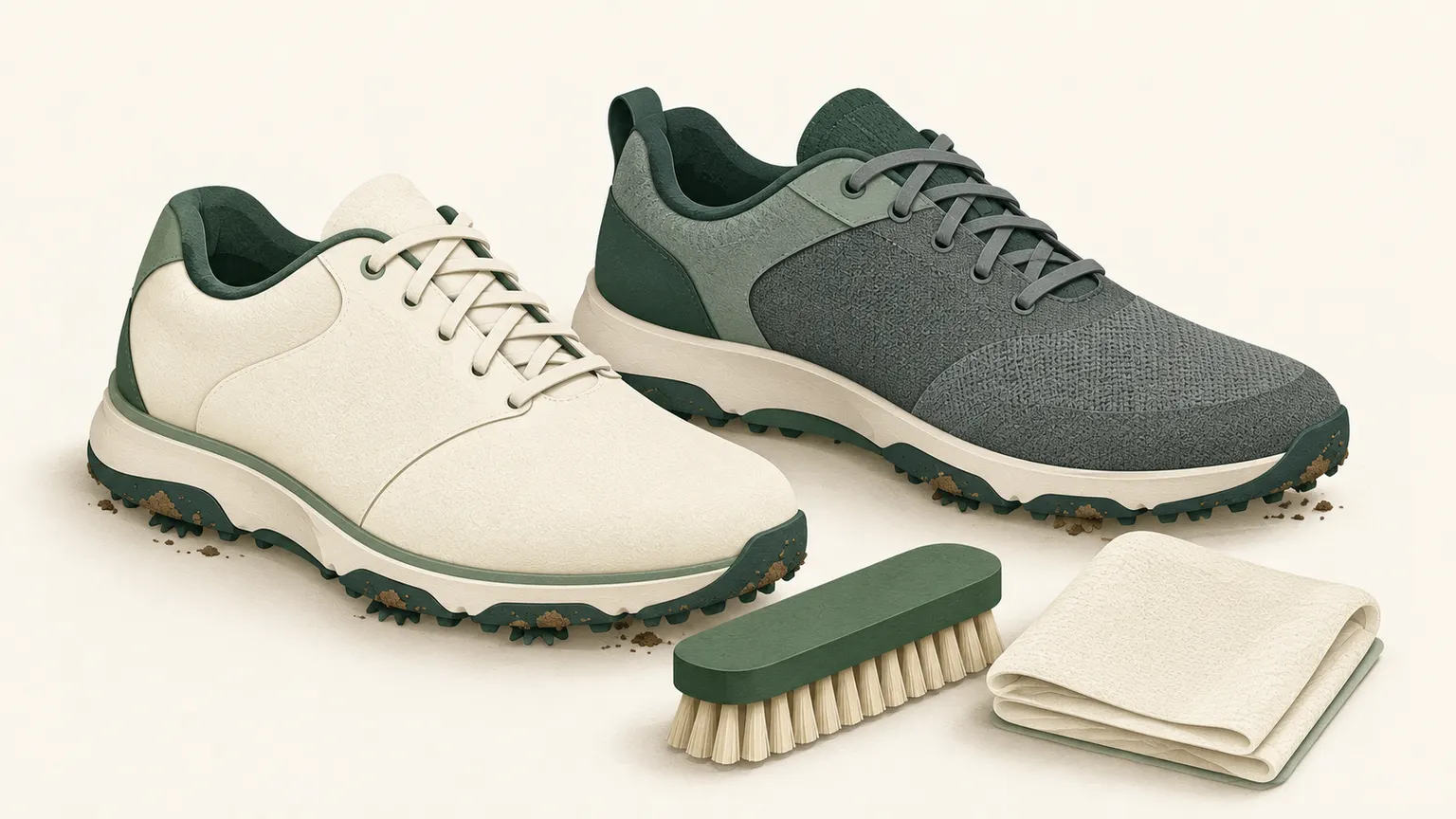
FootJoy's leather/synthetic guidance uses shoe cleaner or mild soap and water to remove residue, followed by room-temperature air drying. It excludes direct sun and external heat. For a matching shoe, check its instructions, clean the affected area with the permitted method, then dry as directed. Do not transfer full-grain leather cream advice to an unidentified synthetic finish. If the material or cleaner is uncertain, ask for that specific answer before proceeding.
Textile and mesh need explicit permission
Skechers describes mild-detergent cloth cleaning for fabric without oversaturation. Its washer route applies only to products marked Machine Washable, not every mesh shoe. That distinction matters: first verify permission, then follow the complete current cycle, detergent and drying instructions on that page. FootJoy has a separate mesh-washing branch; do not export it to other brands. A hand-cleaning route is not permission to immerse the whole shoe.
Treat suede and nubuck as a separate material
Skechers gives suede and nubuck a separate brush/cleaner route. Identify the finish before selecting treatment, rather than assuming every leather surface accepts cream. With mixed panels, list each material on your care card and ask which directions cover the transitions. Do not choose the most aggressive method just because one panel allows it. Photograph the model label and affected area for the maker if you cannot describe the finish clearly.
Keep usable shoes; replace only for a real need
Follow the stated drying method rather than a universal number of hours. Remove an insole only if designed to come out; do not tug to discover whether it is glued. Judge the result against the original job: is dirt still present, or is there a separate fit, damage or wet-use problem? Another cleaning cycle is not proof that those problems can be repaired. Keep shoes that still meet your needs; investigate a genuine unresolved issue before buying a new pair.
If a real wet-use or fit problem remains, consult our waterproof golf-shoe buying guide or golf-shoe fit and arch-support guide. These linked buying guides contain affiliate links; this care article recommends no cleaner or replacement by default. Their legacy URL years and price wording are not promises of current stock or delivered cost.
Can I machine-wash golf shoes because they have mesh?
No. Find washing permission for the exact model, not its appearance. If permission is missing, ask the maker; do not borrow a cycle from a similar-looking shoe.
Should I remove the insoles before cleaning?
Only when they are designed to be removable. If the care instructions do not establish that, leave them in place and ask rather than pulling.
How long should golf shoes take to dry?
This guide does not promise a drying time. Follow the maker's method for your shoe and conditions; do not substitute a heater to meet an arbitrary deadline.