What an alignment line can tell you
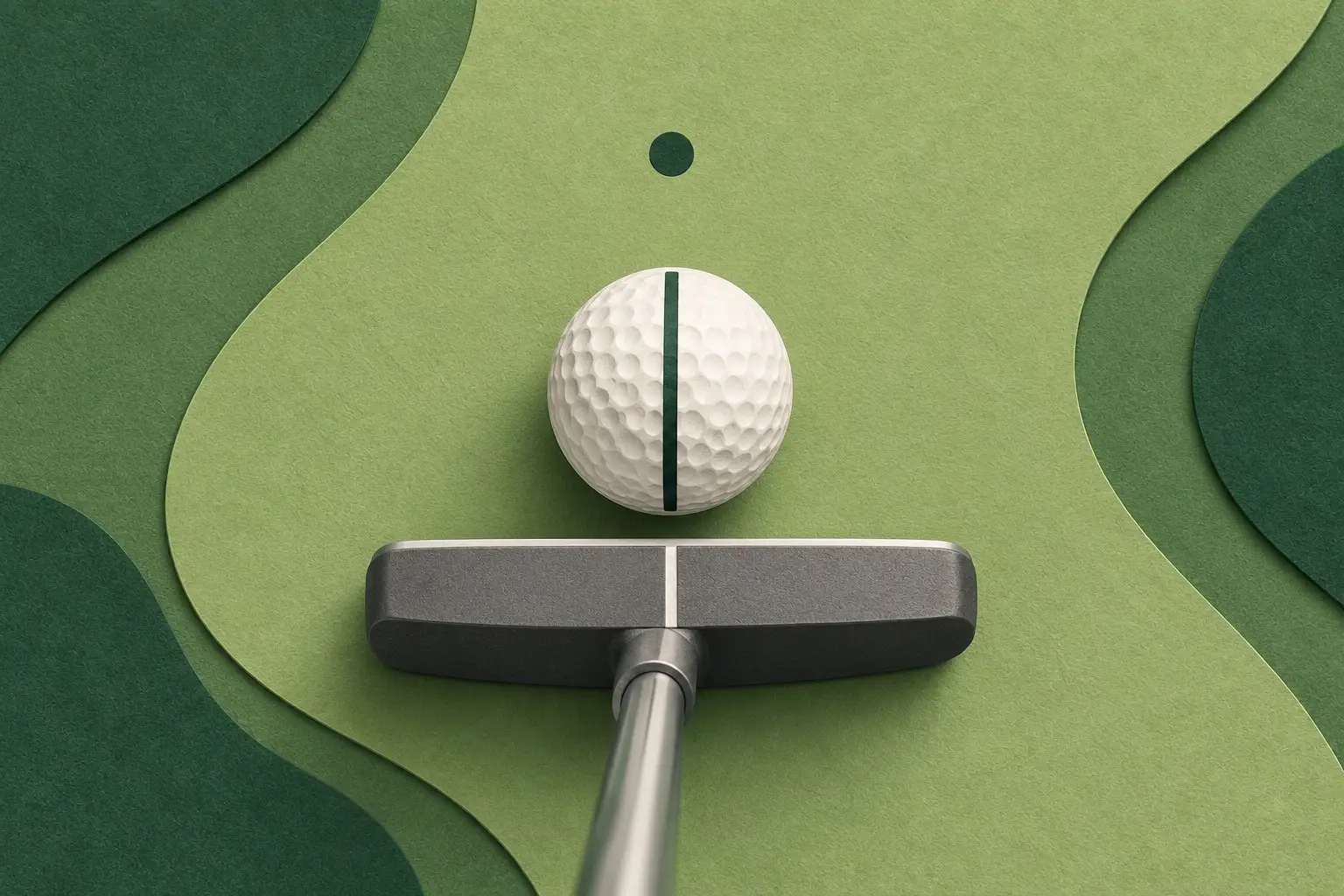
A line or other mark on a golf ball gives your eyes a reference when you place the ball and address a putt. Some golfers like having that cue; others find it distracting or feel they keep adjusting it. The preference is personal.
A printed line does not read the slope, choose a start direction, or guarantee that the ball will start where you intend. It is not evidence of improved aim, more made putts, or lower scores. On a breaking putt, first read the break and choose the initial direction you want the ball to start. If you use the line, point it along that chosen direction; it does not automatically belong on the cup.
Try a no-purchase comparison
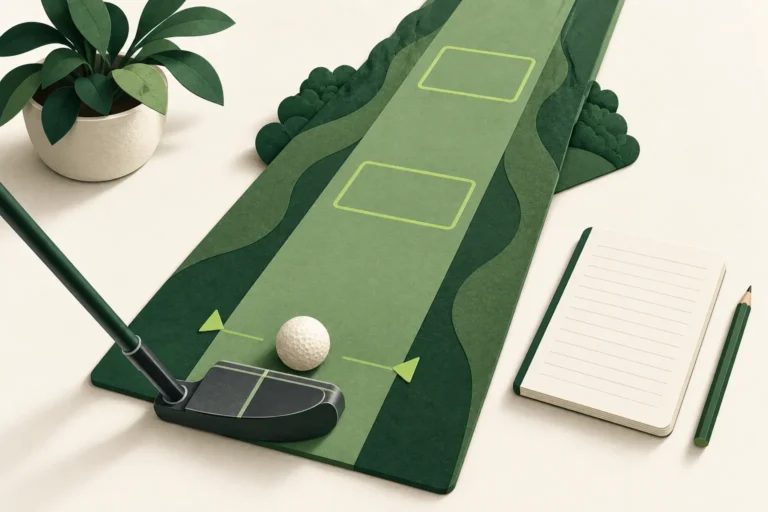
Before buying a special ball or another alignment aid, take the same ball to a practice area outside a playing round. Choose one short putt and a clear target. With the printed line visible, read the putt, choose your initial direction, set the ball, and address it as you normally would. Notice whether the picture helps you settle or makes you want to step away and recheck.
For a simple comparison, turn that same ball so the line is out of sight and repeat from a comparable position. Keep the routine and target the same. This is only a way to notice your setup preference, not a controlled experiment or validated training method. Record whether each view feels comfortable and how often you feel the need to reset or recheck. There is no need to count makes or estimate strokes gained. Those results would not establish a reliable performance effect from this brief check.
If the line helps you settle, you can choose to use it. If it draws your attention away from the target or leads to repeated adjustments, leave it hidden or ignore it. Either choice is reasonable; a line is not required for a sound routine.
Follow the Rules when handling a ball on the green
During a round, Rule 13.1b allows you to mark, lift, and clean your ball on the putting green, then replace it on its original spot. Rule 14.1a treats deliberately rotating the ball as lifting it: mark the ball first, and remove the marker before making the stroke.
Do not set down a club, alignment stick, or another object to help aim or take your stance. Rule 10.2b(3) prohibits using an object this way, and taking it away before the stroke does not avoid the penalty. Keep the visible-versus-hidden comparison and any practice aids outside the playing round; do not repeat the check on course.
When extra gear answers a different question
Keep the ball you already own if this preference check gives you a settled setup. Buying a new ball or adding more markings is not required. If the unresolved question is where your eyes sit or how the putter face looks at address, a purpose-built putting mirror offers a different visual reference; skip one if you only want a ball line or expect it to measure roll or improve scores.
Disclosure: our linked buying guides contain affiliate links. ParteeTime may earn a commission from qualifying purchases, at no extra cost to you.
For that separate setup-feedback need, our putting-mirror buying guide explains which views and features to check. If you already need replacement balls for unrelated reasons, the TruFeel versus Supersoft comparison covers model and pack selection—not a recommendation to buy a special alignment graphic. Its standard-ball cards are not special alignment variants.
Will a line make more putts go in?
There is no guarantee. A line is a visual reference, and this short personal-preference check does not measure or establish a scoring benefit.
Should I point the line straight at the hole?
Not automatically. Read the slope and choose the initial direction you intend the ball to start. On a breaking putt, that direction may not be the cup.
May I rotate my ball to line it up during a round?
On the putting green, mark before lifting or deliberately rotating the ball, replace it on its original spot, and remove the marker before the stroke. See Rules 13.1b and 14.1a.
Can I put a club down to help aim?
No. Rule 10.2b(3) prohibits setting down an object to help with aiming or stance. Removing it before the stroke does not avoid the penalty.
What should I record in the practice comparison?
Only whether the setup feels comfortable and whether you keep needing to reset or recheck. Do this outside a round; do not treat it as a strokes-gained or performance test.